

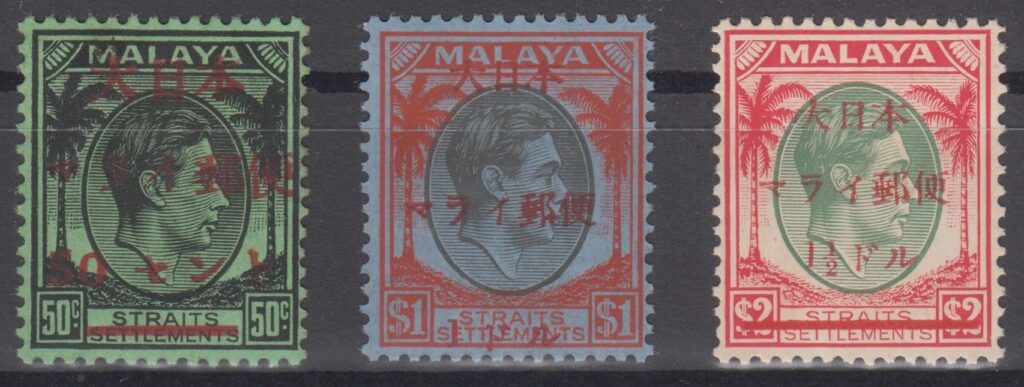
During World War II, the Japanese occupation of Malaya left a unique imprint on the region’s postal history. Among the many philatelic relics from this turbulent period, the Japanese Occupation stamps issued on December 16, 1944, stand out for their rarity and historical significance.
The Context: A War-Torn Region
The Japanese forces occupied Malaya from 1942 to 1945. To establish authority, they repurposed British colonial stamps, overprinting them with Japanese text to symbolize the shift in governance. In late 1944, amidst the pressures of war and growing humanitarian concerns, a new series of overprinted stamps was introduced. These were intended for use on Red Cross letters, aimed at facilitating communication between civilians and prisoners of war—a rare lifeline during a dark chapter of history.
The Stamps: A Brief Life
On December 16, 1944, three stamps were issued in Singapore for this purpose:
- 50 cents (green and black)
- $1 (blue and red)
- $2 (red and green)
These stamps featured the profile of King George VI from the original Straits Settlements design, with an overprint in red Japanese characters. The overprint read “大日本” (“Great Japan”) and “マライ郵便” (“Malayan Postal Service”), marking their usage under Japanese authority.
However, despite their introduction, these stamps were withdrawn after just one day. The reasons for this abrupt withdrawal remain unclear, though logistical challenges or wartime disruptions are likely contributors.
Their Rarity and Significance
The short-lived issuance of these stamps makes them extremely rare and valuable. For collectors, they represent not just philatelic artifacts but also poignant reminders of a complex historical period:
- The struggle to maintain communication in a time of conflict.
- The transformation of postal systems under military occupation.
These stamps are highly sought after by specialists in wartime philately and Japanese occupation issues. Their historical context adds depth to their monetary value, making them coveted pieces in any collection.
Design Highlights
- The base design showcases King George VI, a remnant of British rule.
- The red Japanese overprint asserts the authority of the Japanese occupation government.
- Denominations of 50 cents, $1, and $2 indicate their intended use for specialized or international communication, such as Red Cross letters.
The Legacy
These stamps are more than rare collectibles; they encapsulate a moment in history when even the simplest acts of sending a letter were fraught with challenges. For those fortunate enough to own one, they represent a blend of postal history, wartime survival, and philatelic artistry.
Share Your Thoughts
Have you come across any rare variations of these Japanese occupation stamps? Share your stories or photos in the comments below! And don’t forget to subscribe for more deep dives into the world of stamps and postal history.